Choosing natural stone for interiors
Materials
7 min read
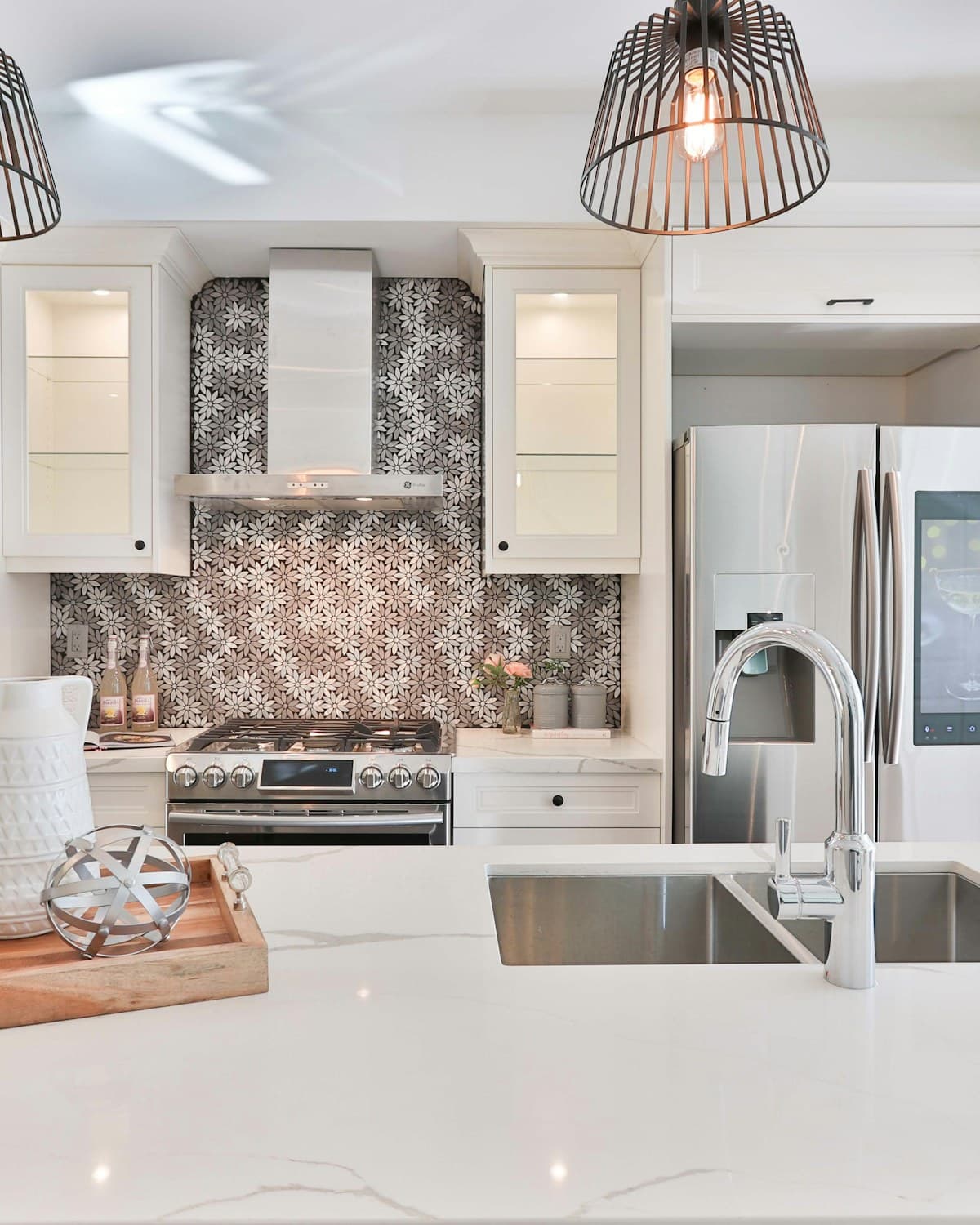
A designer’s framework for selecting local stone by finish, scale, maintenance and the way it changes with use.
Natural stone is never a completely uniform product. Veins, tonal shifts, pores and small inclusions are the material rather than defects to be edited away. Choosing it well begins with deciding how much variation the room can hold.
In Jaipur, access to skilled stone workers and Rajasthan’s quarry traditions creates an unusually rich field of options. The best choice is rarely the most visually dramatic slab; it is the stone whose performance and character suit the specific surface.
Match the finish to touch and movement
A honed finish gives floors and counters a quieter reflection and tends to show the body of the stone clearly. Polishing intensifies colour but may reveal scratches or water marks more readily. Brushed, sandblasted and hand-dressed finishes add grip and texture, making them useful where touch or wet feet are part of daily use.
Ask to see the proposed finish on the actual selected stone. The same treatment can look and feel very different across two varieties.
Design the joints before choosing the slab
Module size, joint alignment and edge details determine whether stone reads as a continuous field or a set of pieces. Starting with available slab dimensions reduces waste and avoids awkward cuts. Book-matching and uninterrupted veining should be reserved for places where the composition genuinely depends on them.
- Confirm slab dimensions and thickness before setting out the room.
- Review dry-laid pieces for tonal distribution before installation.
- Coordinate thresholds, skirtings and drainage falls in the same drawing.
Plan for patina, not permanent newness
Sealers can slow absorption but cannot make every stone immune to use. Acidic liquids affect calcareous stones; grit can abrade polished floors; outdoor surfaces change under sun and monsoon. A realistic maintenance plan should be part of the specification.
Patina becomes coherent when the material is used consistently and detailed without fragile edges. If a surface must remain visually unchanged, another material may be the more honest choice.
Specify stone for the life it will live, including the marks that life will leave.
Planning your own space?
Explore our interior design portfolio or discuss your project with our Jaipur studio.